By MBEHNI Drusilla NANGE_Intern at Civic Watch
In Cameroon’s multifaceted electoral landscape marked by linguistic diversity, regional tensions, and uneven media access, the integrity of information is not merely a technical concern. It is a civic lifeline. As the country approaches the 2025 presidential elections, the digital sphere has become both a battleground and a beacon. It has become a space where misinformation, disinformation and deepfakes thrive, causing citizens to navigate a flood of claims, counterclaims, and manipulated narratives that uphold the norms of ethical reporting through fact-checking. Misinformation poses a serious threat to Cameroon’s electoral integrity, particularly in conflict-affected regions where trust in institutions is already fragile. False narratives such as claims that votes from Anglophone areas won’t be counted or that elections won’t take place have been widely circulated on platforms like Facebook and TikTok, often using recycled footage and separatist propaganda. These messages discourage voter participation, inflame ethnic tensions, and undermine public confidence in democratic processes. During the 2018 elections, manipulated content and tribalized disinformation nearly triggered a grassroots crisis, prompting civil society to launch fact-checking initiatives like 237Check and #defyhatenow to counter the spread. Without robust interventions, misinformation risks distorting public discourse and destabilizing the electoral cycle from pre-voting to post-results
In this fragile ecosystem, tiplines are among channels dedicated for citizens to report suspicious content, ask questions, or share firsthand observations which have emerged as a vital tool for protecting democratic participation and rebuilding public trust.
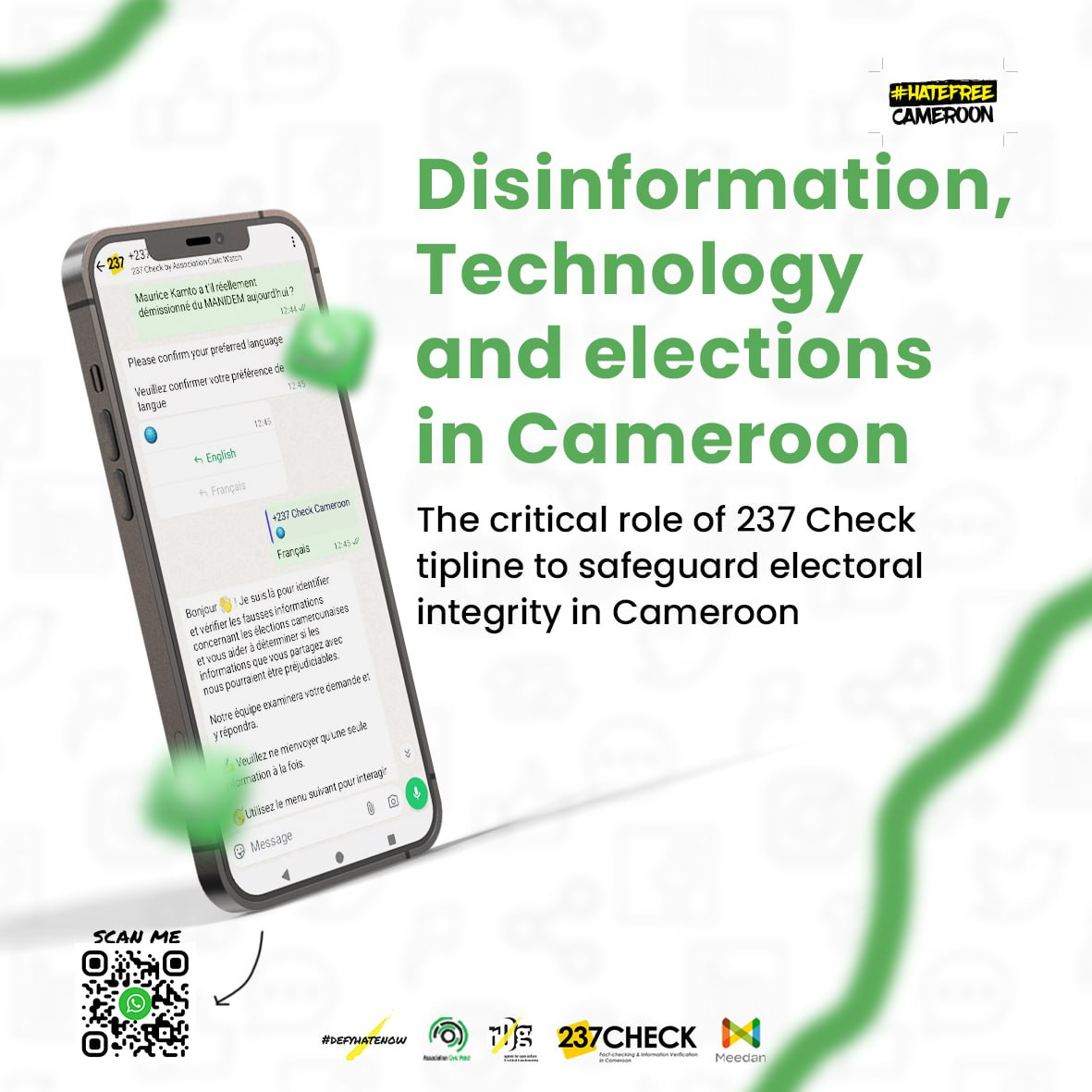
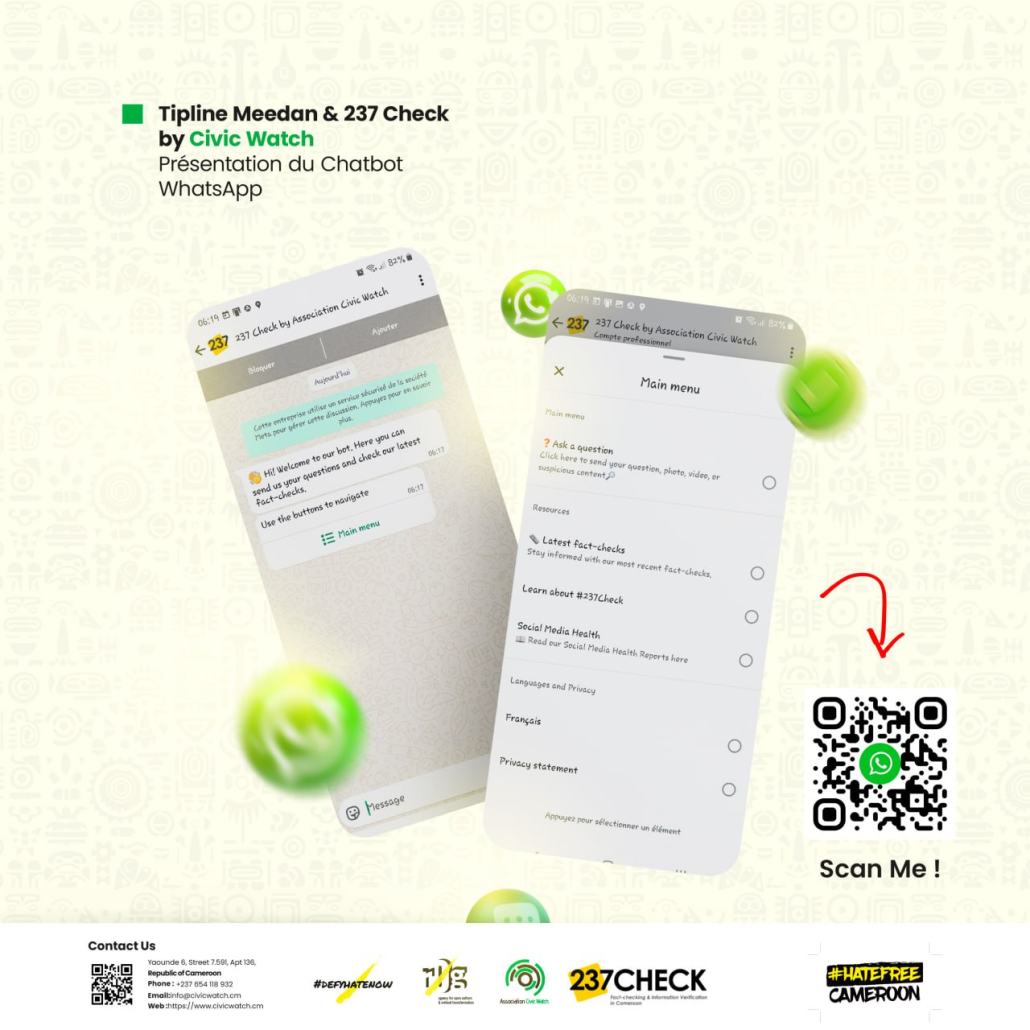
A tipline is a dedicated communication channel often hosted on platforms like WhatsApp, SMS, or web portals where citizens can report suspicious, misleading, or harmful content circulating in their communities or online spaces. These “tips” are then reviewed by moderators or fact-checkers who verify the claims and respond with accurate information. In electoral contexts, tiplines serve as real-time feedback loops between the public and information watchdogs, allowing for rapid detection and correction of disinformation. Civic Watch Cameroon, a youth-led nonprofit, has pioneered such a system through its digital rights and peacebuilding initiatives, particularly under the #defyhatenow program funded by the German Federal Foreign Office and supported by partners like UNESCO and Facebook Inc.

The Civic Watch tipline plays a strategic role in Cameroon’s electoral ecosystem by empowering citizens to counter misinformation and hate speech during critical democratic moments. Ahead of the 2025 presidential elections, Civic Watch organized a two-day conference in Yaoundé focused on digital threats to electoral integrity, where the tipline was highlighted as a key tool for monitoring and responding to online manipulation. Through this channel, voters can anonymously report viral rumors, fake endorsements, or incitement to violence issues that have historically plagued Cameroonian elections, especially in conflict-affected regions. The tipline also enables fact-checkers to track emerging narratives and respond with verified updates, often in local languages, to ensure accessibility and impact.
Its importance lies in its ability to foster transparency, civic engagement, and social cohesion in a digital landscape increasingly vulnerable to manipulation. In a country where press freedom is constrained and traditional media often lacks reach in rural or insecure areas, the Civic Watch tipline offers a decentralized, citizen-driven solution to information disorder. By bridging the gap between communities and credible sources, it helps prevent voter suppression, reduce polarization, and promote peaceful participation. As digital platforms like TikTok and WhatsApp become central to political discourse, tools like Civic Watch’s tipline are not just reactive they are proactive instruments of democratic resilience
Tiplines are not new to the African electoral context. In Nigeria’s 2023 elections, fact-checking organizations like Dubawa and FactCheckHub deployed WhatsApp tiplines to verify viral claims, engage youth voters, and counter coordinated disinformation campaigns. These platforms received thousands of messages daily, ranging from fake endorsements to doctored ballot images, and responded with verified updates that were then amplified through radio, social media, and community influencers. Cameroon, with its own history of contested elections and information suppression, stands to benefit immensely from similar models adapted to its unique sociopolitical terrain.
During Cameroon’s 2018 presidential elections, initiatives like DataCameroon piloted WhatsApp-based tiplines that allowed citizens to flag misleading political ads, rumors about polling station closures, and false claims about voter eligibility. These reports were investigated and publicly debunked, helping to prevent panic and voter suppression, particularly in conflict-affected regions. In the Northwest and Southwest, where traditional media coverage is often disrupted by insecurity, tiplines have enabled anonymous reporting of intimidation, misinformation, and electoral malpractice. This grassroots intelligence has proven invaluable for civil society monitors and international observers seeking real-time, ground-level insights.
But tiplines are more than reactive tools. They are educational instruments that build digital literacy and civic confidence. When a citizen submits a questionable claim and receives a verified response, they learn to spot manipulation, question sources, and share accurate information within their networks. Over time, this cultivates a more discerning electorate, one that is less vulnerable to fear-mongering and more empowered to participate meaningfully in democratic processes.
As good, timely, and necessary as tiplines are in the electoral ecosystem, they face a number of challenges that hinder their expansion such as limited funding, uneven internet access, and the risk of tipline overload during peak election periods can undermine their effectiveness. But these obstacles are not insurmountable. Civic tech innovators can develop AI-assisted triage systems to manage high volumes. Telecom providers can subsidize data costs for tipline users, and community-based organizations can train local moderators to ensure cultural relevance and rapid response.
At Civic Watch, we recognize these realities and are actively working to strengthen our own tipline infrastructure ensuring it remains accessible, responsive, and secure for citizens across Cameroon, especially in underrepresented and conflict-affected regions.
Ultimately, tiplines should be embedded within a broader strategy of civic education, media reform, and inclusive storytelling. They should be integrated into voter education campaigns, school programs, and community dialogues not as add-ons, but as core components of democratic resilience. That’s why Civic Watch is not only promoting its tipline but also investing in training, multilingual outreach, and partnerships with youth networks and local media. In a country where access to verified information can determine whether citizens vote freely or fearfully, our tipline is designed to support free and fair reporting during elections thereby giving every citizen the power to question, report, and be heard.
By amplifying credible voices and responding to misinformation in real time, Civic Watch’s tipline helps build an electoral culture rooted in truth, accountability, and collective vigilance. It’s more than a tool, it’s a civic commitment. And as we prepare for the 2025 elections, we invite communities, journalists, and educators to join us in making this platform a trusted space for electoral integrity and public empowerment.